 Deutsch
 English
 Italiano
 Español
 Polish
 French
 Dutch
Dutch
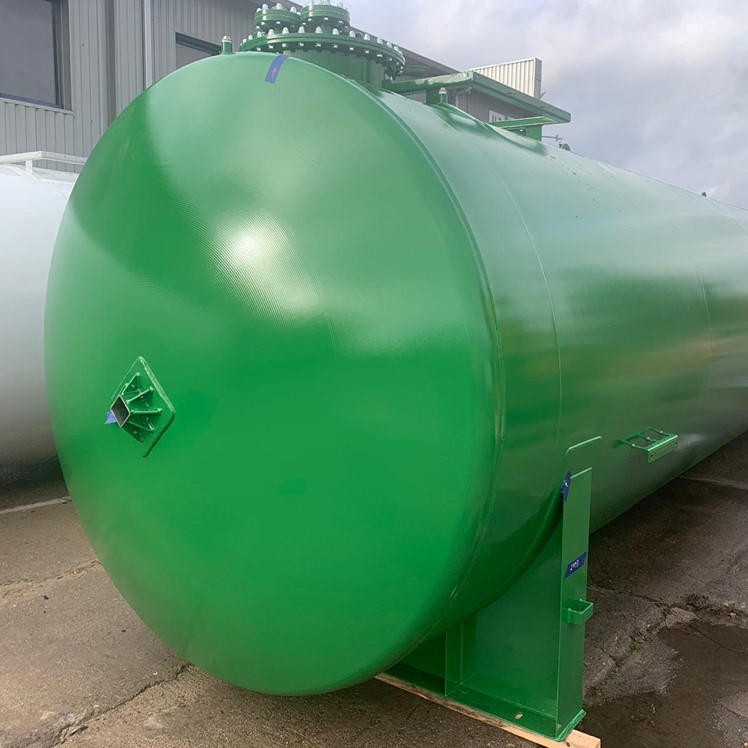
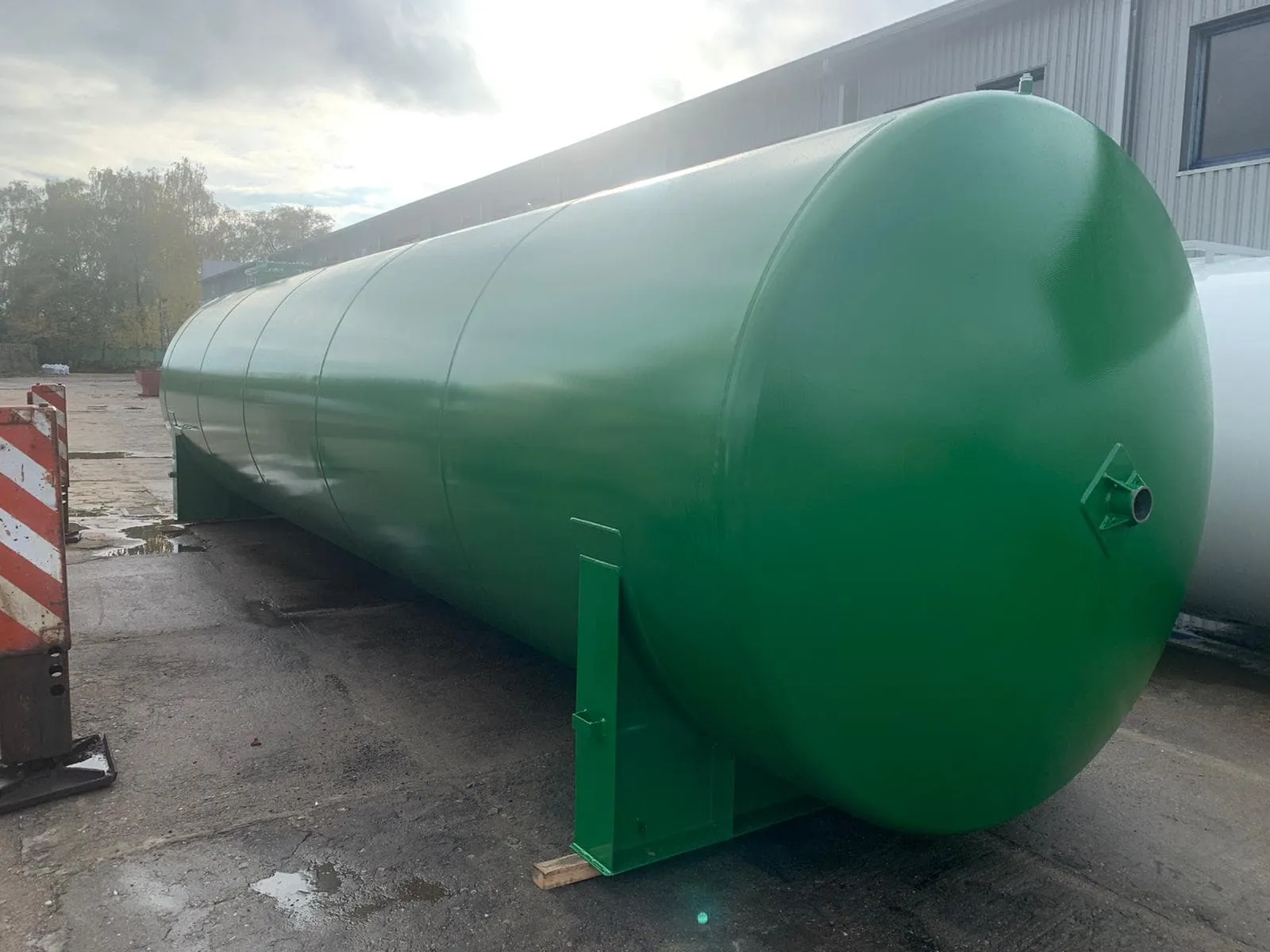
What Is WHG and AwSV? German Water Resources Act Explained
The WHG protects water bodies from contamination by water-hazardous substances. The AwSV specifies the technical and organisational obligations for facility operators.
The German Water Resources Act (Wasserhaushaltsgesetz, WHG) was introduced to protect water bodies from contamination and to establish the foundations for sustainable water management. It specifically governs the handling of water-hazardous liquids — substances that can cause significant damage to groundwater and surface water even in small quantities.
Since August 2017, the Ordinance on Facilities for Handling Substances Hazardous to Water (AwSV) has supplemented the WHG at federal level. The AwSV replaced the former state-level ordinances (VAwS) and, for the first time, established uniform technical requirements across all German federal states. It governs, among other things:
- Classification of water-hazardous substances into water hazard classes (WGK)
- Technical requirements for facilities handling these substances
- Operator obligations — including notification, documentation and inspection duties
- Specialist company requirement for the installation, maintenance and decommissioning of certain facilities
While the WHG sets the regulatory framework, the AwSV defines the specific measures. For vessel manufacturers and operators, the interplay between both sets of regulations is crucial.
Water Hazard Classes (WGK 1–3): Classification & Requirements
The classification into WGK 1 to 3 determines the safety precautions required for storage and transport.
Water-hazardous substances are classified into three water hazard classes according to the AwSV. The classification is carried out by the German Federal Environment Agency and is publicly accessible for each substance in the Rigoletto database.
| Class | Hazard Level | Description | Examples |
|---|---|---|---|
| WGK 1 | Slightly water-hazardous | Substances that can only impair water bodies to a minor extent | Ethanol, acetone, isopropanol, glycol |
| WGK 2 | Clearly water-hazardous | Substances that can damage water and require special precautionary measures | Diesel fuel, heating oil EL, lubricating oils |
| WGK 3 | Highly water-hazardous | Substances that can cause significant environmental damage even in small quantities | Petrol, waste oils, chlorinated hydrocarbons |
The classification significantly determines the requirements for the vessel: the higher the WGK, the stricter the specifications for containment, leak detection and inspection intervals. Additionally, the category “generally water-hazardous” (awg) exists, which covers substances such as liquid manure, slurry and silage effluent.
Approvals & Standards for WHG-Compliant Tanks (DIN 6616 / EN 12285)
WHG-compliant tanks must meet stringent approval and certification standards — from specialist company certification to DIN and EN standards.
WHG Certification as a Specialist Company
Tank manufacturers can be certified as a specialist company under WHG. The specific requirements for specialist companies are governed by Section 62 AwSV (qualifications, equipment, monitoring agreement), while Section 62 WHG provides the overarching legal framework. Certification authorises the manufacture, installation, maintenance and decommissioning of WHG tanks and requires that the company has qualified personnel, suitable equipment and an operational quality management system. Monitoring is carried out by an approved expert organisation (e.g. TÜV, DEKRA).
DIN and EN Standards
All WHG-compliant tanks must comply with the relevant DIN and EN standards. The most important standards at a glance:
- EN 12285-1: Factory-made steel tanks — Horizontal cylindrical single-wall and double-wall tanks for underground storage (successor to DIN 6608)
- EN 12285-2: Factory-made steel tanks — Horizontal cylindrical single-wall and double-wall tanks for above-ground storage (successor to DIN 6616)
- DIN 6616: Horizontal cylindrical tanks made of steel sheet for above-ground storage — superseded by EN 12285-2, no longer listed for new installations (MVV TB 2024/1)
- DIN 6618 (Parts 1–3): Vertical cylindrical steel tanks (single-wall, double-wall without/with leak detection fluid) — withdrawn, but still used as a reference for vertical designs in the absence of an EN successor
These standards guarantee the mechanical stability, tightness and resistance of the tanks to chemical influences.
Pressure Equipment Directive (PED) as a Supplementary Framework
The Pressure Equipment Directive (PED 2014/68/EU) formally applies to pressure equipment with a maximum allowable operating pressure exceeding 0.5 bar. In coordination with the responsible monitoring authority (e.g. TÜV), the PED and the associated standard EN 13445 can also be applied as a higher-level regulatory framework for atmospheric WHG tanks. This approach is particularly useful for vertical designs, for which no current EN standard exists following the withdrawal of DIN 6618. EN 13445 is, according to its own scope, also applicable to vessels below 0.5 bar and sets high requirements for material testing, weld seam quality and documentation.
The Ü-Mark (Conformity Mark)
The Ü-mark (Übereinstimmungszeichen / conformity mark) is affixed by the manufacturer in addition to the nameplate on the vessel. It confirms that the product complies with the underlying general construction approval (abZ) or type approval (aBG) issued by the DIBt and has been manufactured in accordance with the recognised rules of technology. Prerequisites include in-house production control and, where applicable, third-party monitoring by a recognised testing body. For operators, the Ü-mark serves as important evidence during regulatory inspections and recurring tests.
Tank Designs: Single-Wall vs. Double-Wall Storage Tanks
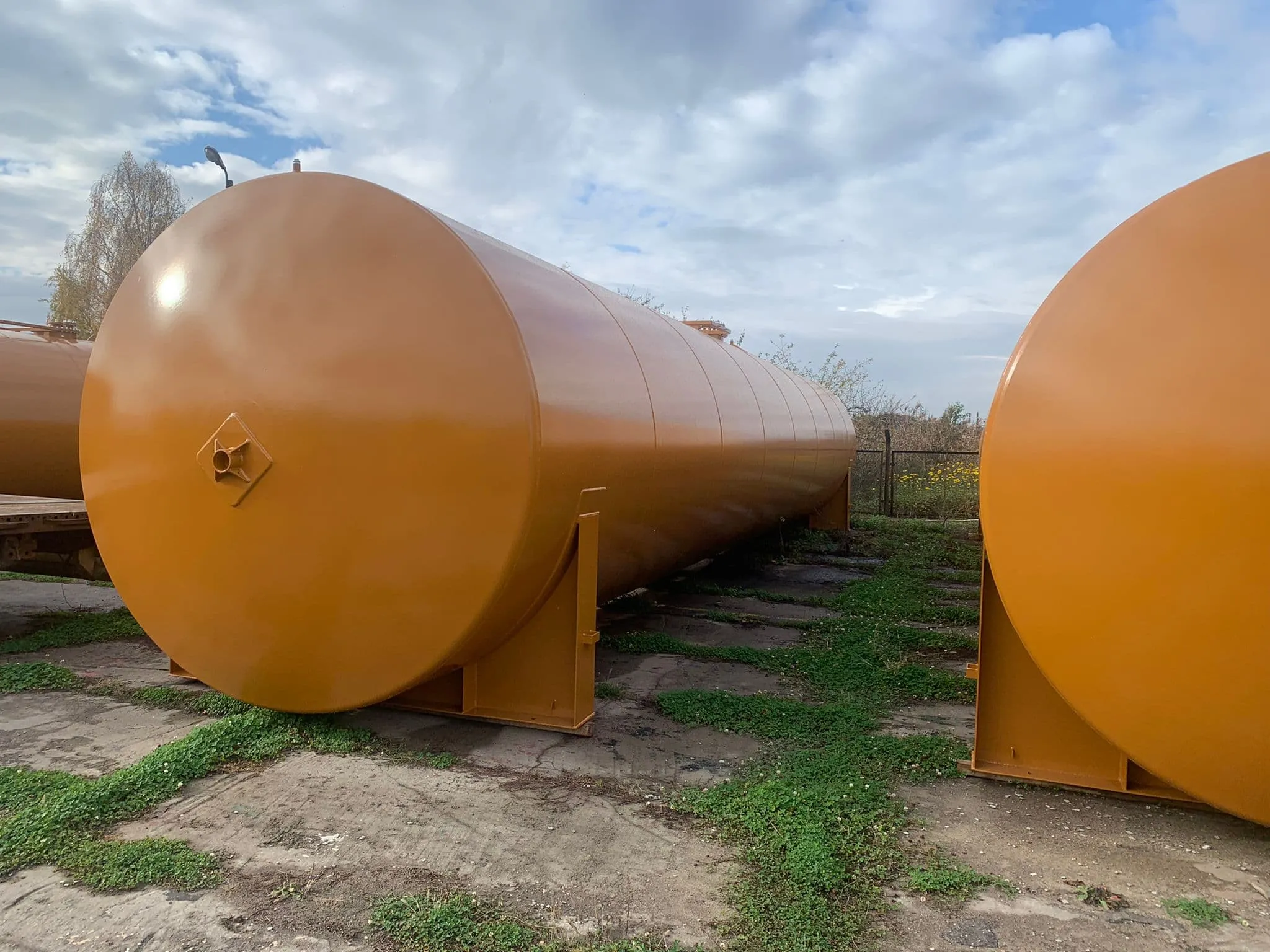
A wide range of designs can be realised in WHG-compliant form — from single-wall above-ground to double-wall underground storage tanks.
The most commonly used designs can be summarised as follows:
| Design | Configuration | Standard Basis |
|---|---|---|
| Above-ground, horizontal | Single-wall / Double-wall | EN 12285-2 (formerly DIN 6616) |
| Underground, horizontal | Double-wall | EN 12285-1 (formerly DIN 6608) |
| Above-ground, vertical | Single-wall | Based on DIN 6618-1 (withdrawn) or EN 13445 / PED |
| Above-ground, vertical | Double-wall | Based on DIN 6618-2/3 (withdrawn) or EN 13445 / PED |
The exact requirements and permissible designs may vary depending on the federal state and specific application. It is therefore important to observe the relevant local regulations and guidelines. Single-wall tanks fundamentally require an additional containment system (bund/catch basin), while double-wall tanks with leak detection are recognised as an equivalent safety solution.
Safety Features Required by WHG: Leak Detection, Overfill Protection
WHG tanks feature special safety characteristics that prevent leaks and environmental damage — from leak detection systems to double-wall construction.
The technical equipment of a WHG-compliant tank goes well beyond a standard storage vessel. The following safety features are typical:
- Leak detection systems: Monitor the interstitial space in double-wall vessels for pressure or vacuum changes and report leaks at an early stage. For single-wall tanks, they monitor the containment area.
- Overfill protection: Prevents the tank from overflowing during the filling process. It is mandatory equipment for all WHG tanks and automatically triggers a stop of the filling process when the permissible fill level is reached.
- Venting devices: Compensate for pressure differences during filling and emptying and ensure safe operation. Sizing is based on the maximum volumetric flow rate.
- Double-wall construction: Provides an additional protective barrier. In the event of a leak, the stored liquid first enters the monitoring space between the inner and outer wall — rather than escaping uncontrolled into the environment.
- Bunds / catch basins: Substructures that, in the case of single-wall tanks, collect escaping liquid and prevent soil contamination.
- Reinforcements: Internal stiffening rings and baffles increase structural integrity and stability, particularly for large vessel volumes.
Secondary Containment (Bund) Requirements under AwSV
For single-wall tanks, the AwSV prescribes a retention volume that can safely contain the entire stored medium in the event of a leak.
The AwSV distinguishes the requirements for retention volume according to the type of facility and the water hazard class:
- Single-wall vessels: Fundamentally require a bund or containment area. According to Section 18 AwSV, the retention volume must correspond to the volume that could be released during an operational malfunction until suitable safety measures take effect. In practice, the volume of the largest individual vessel is frequently applied as the minimum.
- Double-wall vessels with leak detection: Are considered facilities with integrated containment. An additional bund is generally not required — the monitoring space between the walls assumes this function.
- Facilities in water protection zones: Stricter requirements apply here. As a rule, double-wall construction with leak detection is mandatory.
The containment system must be resistant to the stored medium and must not have any drains into the ground or sewage system. Steel bunds are frequently provided with a media-resistant coating to prevent corrosion.
Specialist Company under WHG — What Is Required?
The specialist company requirement under Section 45 AwSV stipulates that certain activities on WHG facilities may only be performed by certified specialist companies.
The specialist company requirement applies to the following activities on facilities for handling water-hazardous substances:
- Installation (setting up, fitting, connecting)
- Maintenance (servicing, upkeep)
- Repair (restoring proper condition)
- Decommissioning (taking out of service and securing)
Exempt from the specialist company requirement are only certain simple facilities of hazard level A (e.g. heating oil tanks up to 1,000 litres above ground in buildings). For all larger facilities and higher hazard levels, the rule is clear: no specialist company, no operation.
A specialist company must be monitored by an approved expert organisation (e.g. TÜV, DEKRA). The monitoring agreement is regularly renewed and covers the assessment of the quality management system, technical equipment and staff qualifications.
Recurring Inspection Requirements under AwSV
WHG facilities are subject to regular inspection requirements. The intervals depend on the hazard level, storage volume and location.
The AwSV provides a graduated inspection system. Inspections are carried out by approved experts (AwSV experts, e.g. from TÜV):
- Inspection before commissioning: Every newly installed facility must be inspected by an AwSV expert before the first fill.
- Recurring inspection (outside protection zones): Above-ground facilities of hazard levels C and D are inspected every 5 years. Underground facilities of all hazard levels are also inspected every 5 years. Above-ground facilities of levels A and B have no recurring inspection requirement outside of protection zones.
- Recurring inspection (in protection zones): Underground facilities are inspected every 30 months (2.5 years). Above-ground facilities from hazard level B are inspected every 5 years.
- Inspection upon significant modification: Any significant modification to the facility (e.g. expansion, conversion) triggers a renewed inspection requirement.
- Decommissioning inspection: Proper inspection and documentation are also required when taking a facility out of service.
The inspection intervals are based on the hazard level (A to D), which is determined by the combination of storage volume and water hazard class (Section 39 AwSV) — not solely by the WGK. The inspection intervals are specified in Annex 5 (outside protection zones) and Annex 6 (in protection zones) of the AwSV.
The inspection report is submitted to the operator and the responsible water authority. Defects must be rectified within a specified deadline. The operator is obliged to retain the inspection reports for the entire operational lifetime of the facility.
WHG-Compliant Tanks from Behälter KG — Manufacturing at the Highest Level
Manufacturing WHG-compliant tanks requires a vessel manufacturer to possess a high degree of technical expertise and strict compliance with legal regulations. Behälter KG is certified as a specialist company under WHG and manufactures storage tanks, pressure vessels and custom constructions in steel and stainless steel — compliant with DIN, EN and PED.
From consulting through design to delivery, we support our customers in implementing all requirements. Whether a single-wall storage tank with bund or a double-wall vessel with integrated leak detection — every tank is individually manufactured according to the specific requirements of the project.